A Day in the Life of an Apple Hardware Engineer
Starting the Day: Morning Standups and Lab Check-Ins
A typical day in the life of an Apple hardware engineer starts quietly, often before the office feels fully awake. Hardware teams operate on tight product schedules, and many engineers begin the morning by reviewing overnight emails, test logs, or simulation results. Because Apple works across multiple time zones, it is common to see updates from manufacturing partners, firmware teams, or validation engineers who were active while the local team was offline. These early check-ins help engineers understand what moved forward overnight and what issues may need attention before the day gains momentum.
Morning standups are usually short but focused. Hardware engineers gather with their immediate teams to walk through blockers, upcoming milestones, and any urgent design concerns. Unlike software standups that often revolve around feature progress, hardware standups frequently center on measurements, failures, and physical constraints. Someone might report that a board is drawing more current than expected, or that a high-speed signal is showing unexpected jitter. Another engineer might mention that a prototype came back from the lab with thermal behavior outside the expected range. These conversations set the tone for the day and help prioritize what needs immediate attention.
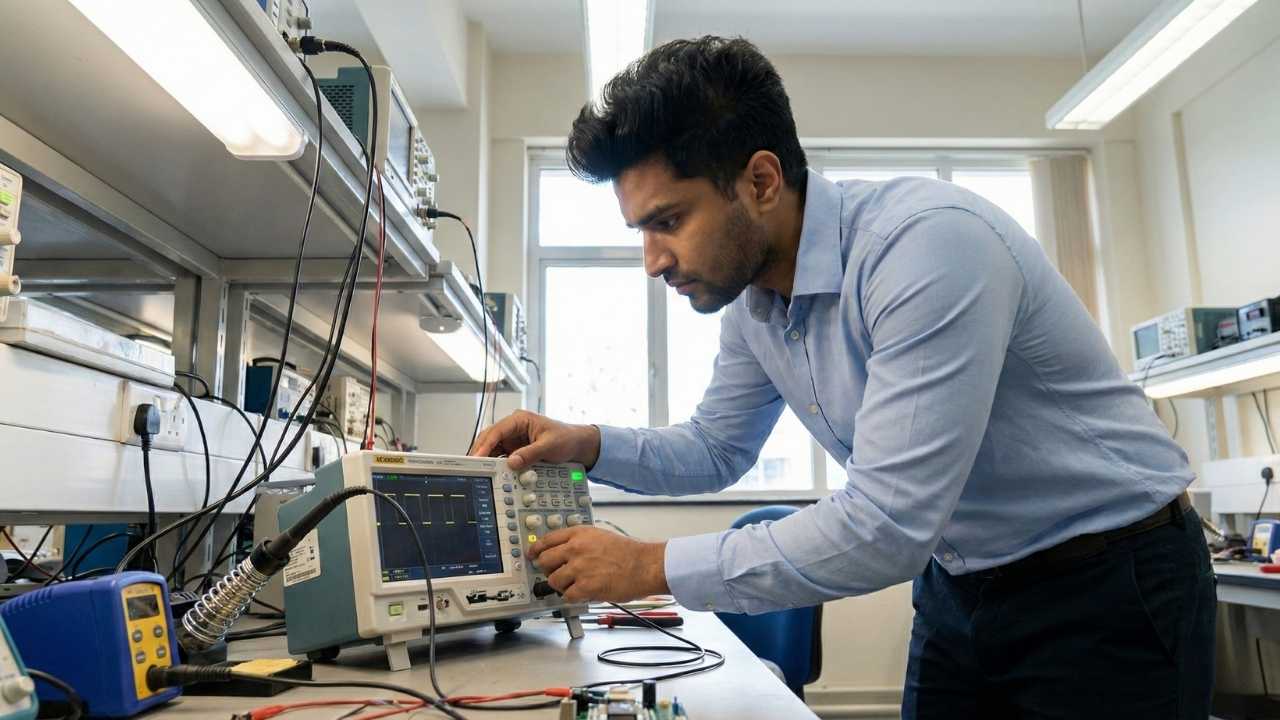
After the standup, many engineers head straight to the lab or their workbench. Even if most of the design work is done in simulation or schematic tools, real hardware is the ultimate truth. An engineer might connect a scope to a test board, verify a power rail, or re-run a measurement that looked suspicious the night before. These early lab check-ins are a normal part of life at Apple hardware teams because the culture places a strong emphasis on empirical results. Measurements are not just a formality. They are the foundation for decisions that can affect millions of devices.
Deep Focus: Design Reviews and Circuit Debugging
Once the morning rhythm settles, the day often shifts into a period of deep technical focus. This is when Apple hardware engineers spend time reviewing schematics, running simulations, or preparing for design reviews. These sessions are some of the most important parts of the hardware development process because they ensure that every detail has been considered before a design moves forward.
Design reviews at Apple are known for being thorough and detail-oriented. Engineers are expected to explain not just what they designed, but why they made specific decisions. For example, a power engineer might present a regulator design and walk through efficiency calculations, thermal margins, and worst-case load conditions. A signal integrity engineer might explain trace impedance, termination strategies, and eye diagram results. These reviews are rarely about one person defending their work. Instead, they function as collaborative technical discussions where the entire team contributes to making the design stronger.
Circuit debugging is another major part of the day. Even with careful planning and simulation, hardware rarely works perfectly on the first attempt. Engineers often spend hours tracing signals, comparing measured waveforms to expected results, and isolating the root cause of an issue. This might involve adjusting component values, probing different nodes on a board, or running new simulations to validate a theory. The process requires patience and methodical thinking, especially when the issue is subtle or only appears under specific conditions.
This part of the day is where many engineers feel most engaged. There is a certain satisfaction that comes from tracking down a difficult problem and watching the circuit behave correctly after a fix. It is not always glamorous work, but it is deeply technical and rewarding. Over time, these debugging sessions build intuition and experience that no textbook can provide.
Cross-Team Collaboration: Working With Silicon, Firmware, and Product Teams
One of the defining aspects of life at Apple hardware teams is the level of cross-functional collaboration. Hardware engineers rarely work in isolation. Almost every decision has ripple effects across silicon design, firmware development, mechanical engineering, and product teams. Because of this, a significant portion of the day is spent in meetings or informal discussions with other groups.
A hardware engineer might meet with the silicon team to review interface timing or power requirements. These conversations often involve detailed discussions about voltage margins, clock domains, and signal integrity concerns. The goal is to ensure that the board-level design and the chip-level design work together seamlessly. If there is a mismatch in assumptions, it can lead to serious issues later in the product cycle.
Meetings with firmware teams are also common. Firmware controls how the hardware behaves in real-world conditions, and close coordination is essential. Engineers might discuss power sequencing, initialization routines, or how a certain peripheral should be configured. These conversations help ensure that the hardware and firmware are aligned, especially when new features or performance targets are involved.
Product teams bring a different perspective. They focus on user experience, industrial design, and overall system goals. Hardware engineers often work with these teams to balance technical constraints with product requirements. For example, a product team might want a thinner enclosure or a longer battery life. The hardware team then has to find creative solutions to meet those goals without compromising performance or reliability.
These cross-team interactions are a core part of the Apple hardware engineering experience. They require strong communication skills, technical depth, and the ability to see the bigger picture. Engineers who thrive in this environment are usually those who can translate complex technical concepts into clear, practical decisions.
The Lab Hours: Prototypes, Measurements, and Iteration
Afternoons often bring engineers back into the lab. This is where the physical reality of hardware development becomes most visible. Prototypes arrive, boards are powered on for the first time, and measurements reveal whether the design behaves as expected.
A typical lab session might involve setting up oscilloscopes, logic analyzers, and power supplies to test different parts of a circuit. Engineers carefully measure voltages, currents, timing relationships, and thermal performance. They compare these results to simulation data and design expectations. If something does not match, it becomes the starting point for a new debugging session.
Iteration is a constant theme in Apple hardware engineering. Rarely does a design move from concept to production without multiple rounds of refinement. Engineers might tweak component values, adjust layout constraints, or change firmware settings to improve performance. Each iteration brings the design closer to the final product.
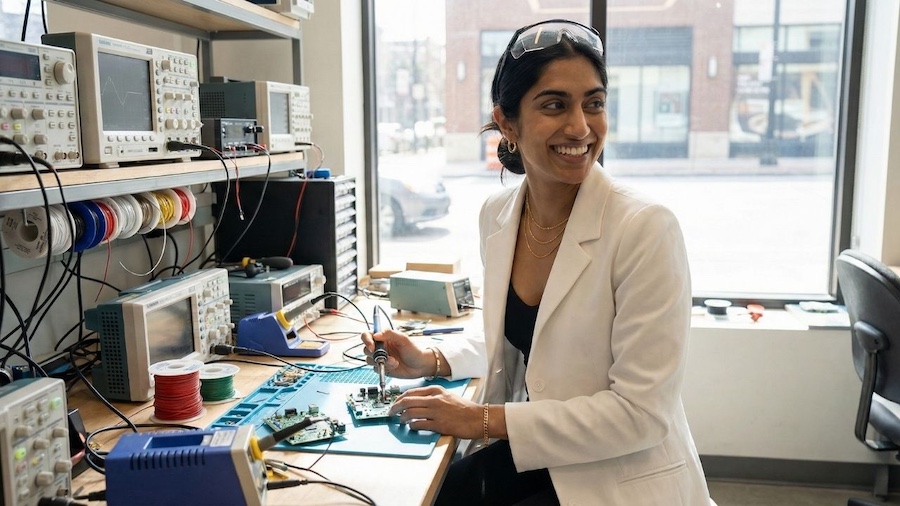
These lab hours are often the most hands-on part of the job. They involve soldering components, reworking boards, or even building small test setups to validate a theory. While the work can be meticulous, it is also deeply satisfying. There is something uniquely rewarding about seeing a circuit come to life after weeks or months of design effort.
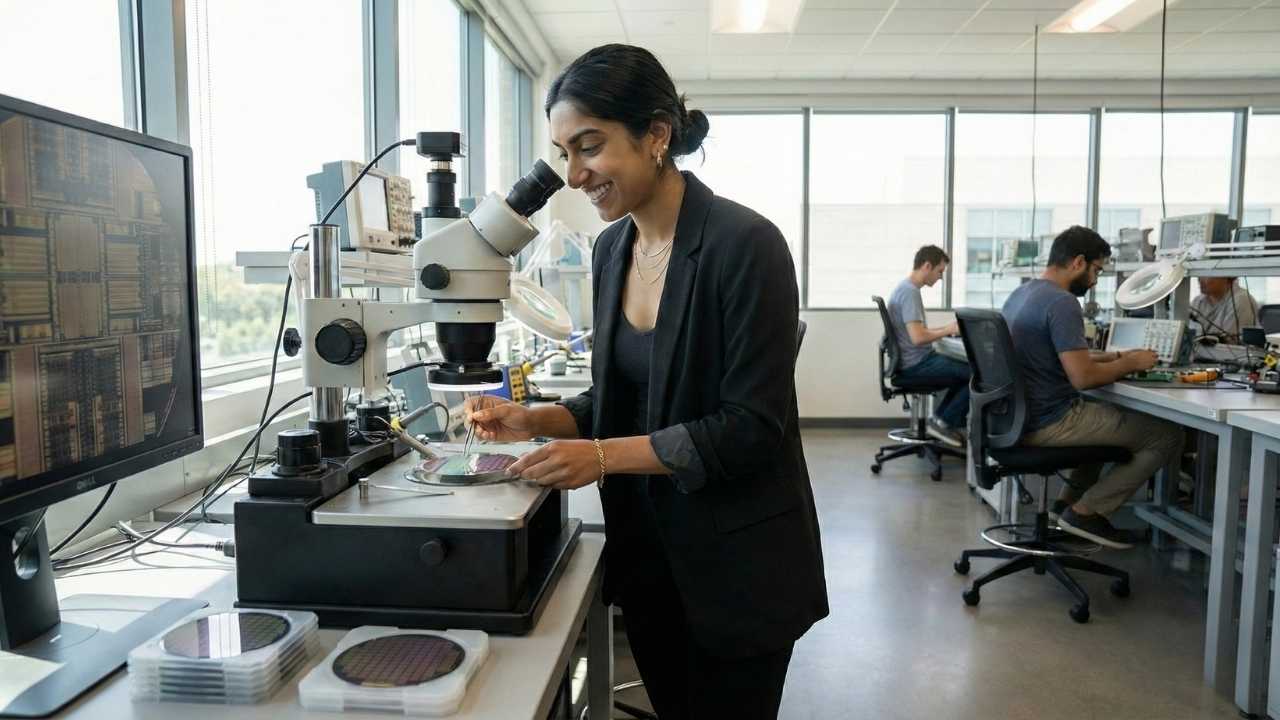
The lab environment also fosters informal collaboration. Engineers frequently stop by each other’s benches to discuss a tricky measurement or share a new insight. These spontaneous conversations often lead to faster solutions and stronger designs. Over time, the lab becomes a central hub of both technical progress and team culture.
Wrapping Up: Documentation, Planning, and the Quiet Satisfaction of Progress
As the day winds down, many engineers shift their focus to documentation and planning. Hardware development involves a large amount of written communication, from design notes and test reports to specification updates and review summaries. Clear documentation ensures that knowledge is preserved and that teams can move forward efficiently.
Engineers often spend the last part of the day updating schematics, writing measurement summaries, or preparing slides for upcoming design reviews. These tasks may not be as exciting as lab work or debugging, but they are essential for keeping the project organized. In large, complex hardware programs, good documentation can save weeks of confusion down the line.
Planning for the next day is also a common ritual. Engineers review their task lists, prioritize open issues, and set goals for upcoming milestones. This might involve scheduling lab time, ordering new components, or coordinating with other teams. Because hardware schedules are tightly linked to manufacturing timelines, careful planning is critical.
There is usually a quiet sense of satisfaction at the end of a productive day. Even small victories, like fixing a noisy power rail or closing a timing margin issue, contribute to the larger goal of shipping a polished product. Over months and years, these daily efforts add up to devices that millions of people use every day.
For many engineers, that connection between detailed technical work and real-world impact is what makes life at Apple hardware teams so compelling. It is a demanding environment, filled with tight schedules and complex problems, but it also offers the chance to work on products that shape how people interact with technology. Each day brings new challenges, new measurements, and new opportunities to learn, making the experience both intense and deeply rewarding.
Voltage Learning
Helping hardware engineers ace their interviews